Ten years to earn back a deposit
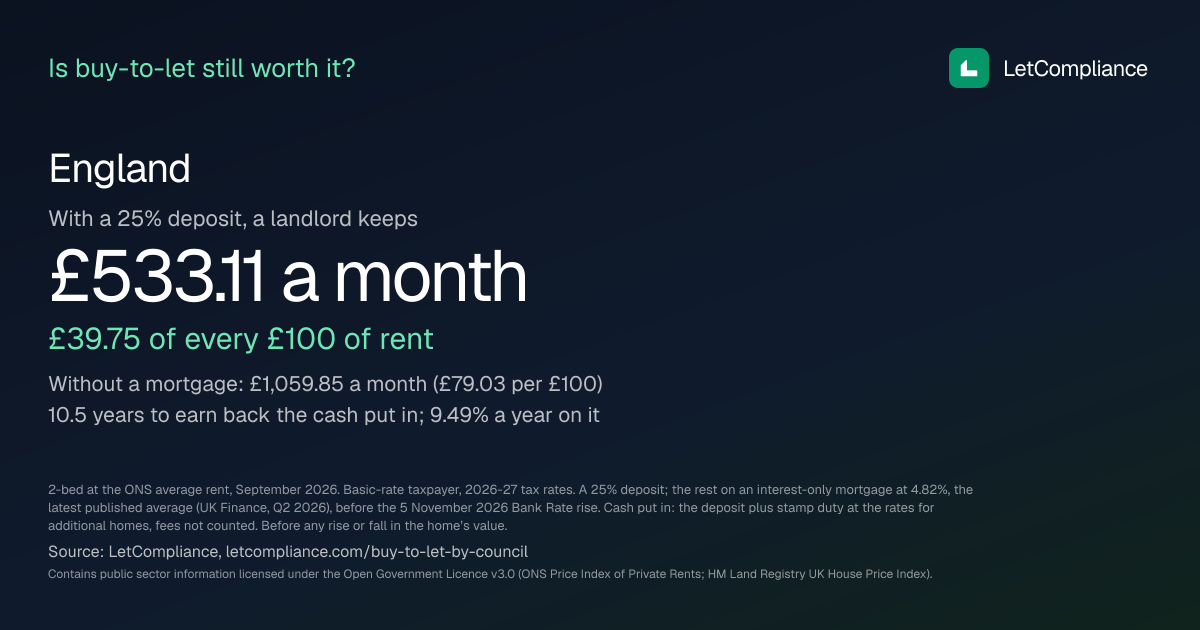
Someone who saves a 25% deposit and buys England’s average flat puts in £67,440, including £12,799 of stamp duty. The rent leaves them £533.11 a month, so it takes 10.5 years just to get that money back. Across the 293 councils the middle figure is 10 years: 148 councils get there in ten years or less, but 31 take more than fifteen and 11 more than twenty. In London the middle borough takes 16.6 years, Westminster 31.1 years, Camden 35.9 years and Kensington and Chelsea 64.2 years. For an ordinary saver, that is a long wait for a modest income.
The bank takes half the rent
Of every £100 of rent in England, £49.10 goes on mortgage interest. In Westminster, Camden and Kensington and Chelsea the interest alone takes £71.20 to £82.17 of every £100, because flats there cost so much against their rent. The rate here is 4.82%, the latest published average (UK Finance, Q2 2026), before the 5 November 2026 Bank Rate rise. At 5.66%, Moneyfacts’ average five-year fix for a 25% deposit (1 August 2026), the same landlord in England keeps £441.31 a month instead of £533.11, and needs 12.7 years to earn the deposit back.
Earn more, keep less: the taxman takes more than the landlord
Mortgage interest cannot be taken off the rent before tax (Section 24); it earns only a 20% tax credit. For anyone already earning £50,270 or more, that one rule costs a landlord with England’s average loan £131.68 a month. Of every £100 of rent, the taxman then takes £29.70 and the landlord keeps £20.00. That holds in 292 of 293 councils: everywhere except Boston, a higher-rate landlord with a 25% deposit pays more income tax on the let than they keep from it. In Camden and Kensington and Chelsea they lose money every month and still pay tax: £812.44 a month in Kensington and Chelsea, on a let that costs them £209.04 a month.
And the tax is going up again
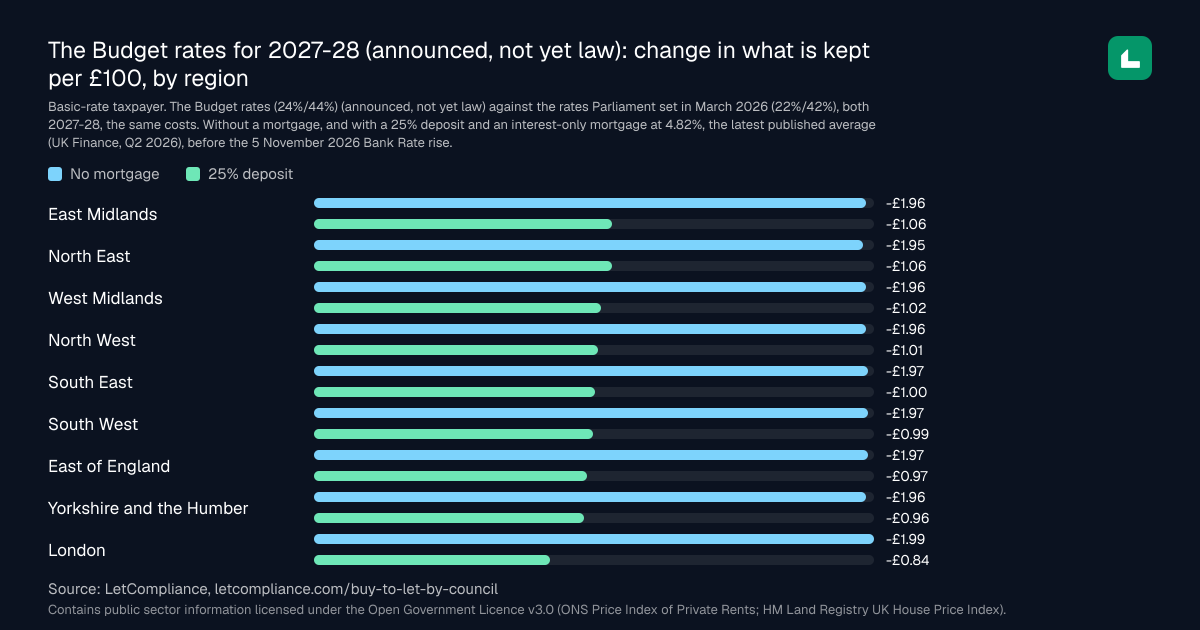
Parliament set higher rates of income tax on property income for April 2027 in March (22% and 42%), and the Budget of 28 October plans to raise them again, to 24% and 44% (announced, not yet law). At those Budget rates (announced, not yet law) the higher-rate taxman takes more than the landlord keeps in all 293 councils, a basic-rate landlord in England needs 11.1 years to earn back the deposit and a higher-rate one 23.3 years. The Budget’s extra two points take £0.99 of every £100 from a landlord with a 25% deposit and £1.98 from one with no mortgage.
Compliance is not what squeezes landlords
The compulsory fees of letting (the gas, electrical and energy certificates, the PRS Database fee of £65 a year, whose regulations still await Commons approval, and a council licence where there is one) take £1.21 of every £100 of rent in England, and £1.77 in the middle council. Even where they are highest, in North East Lincolnshire, they take £5.60. In England, interest and tax take £59.04 of every £100, almost fifty times as much. The rules are not what makes the numbers fail; the mortgage and the tax are.
Where you buy matters as much as how you borrow
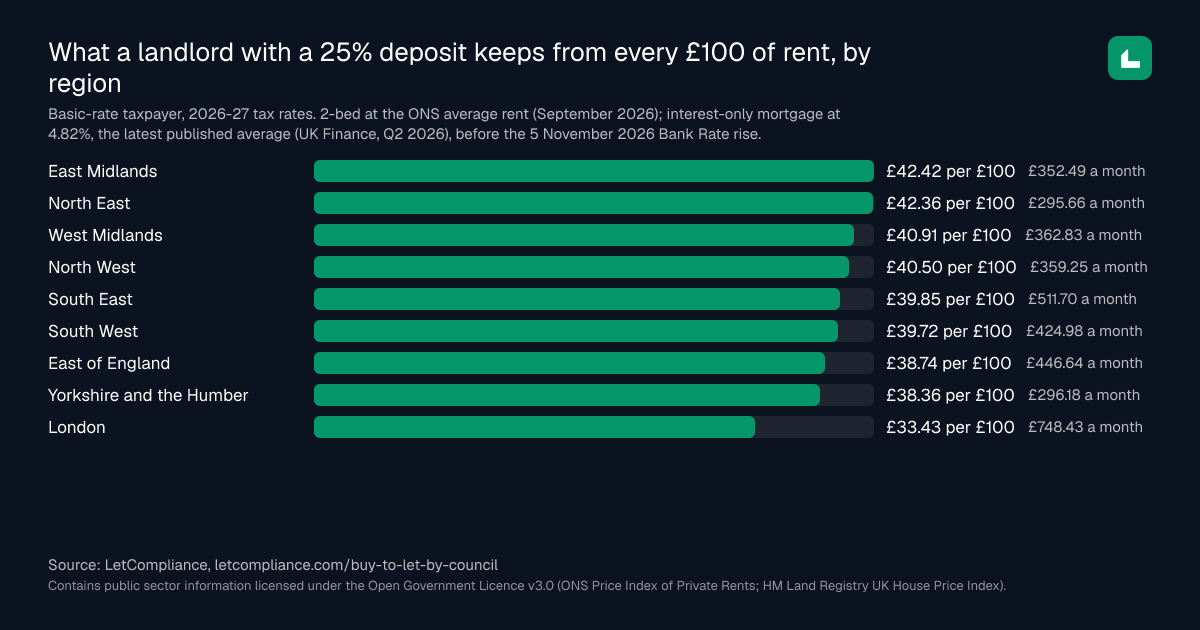
Without a mortgage, a landlord keeps between £75.52 and £79.51 of every £100 wherever the home is. With a 25% deposit, the range runs from £54.96 in Boston to £12.07 in Kensington and Chelsea, because the price of a flat against its rent varies so much across England. London keeps the most in pounds, £748.43 a month, but the least of every £100: £33.43.
What these figures leave out makes it worse, not better
Everything above is before an agent’s fee, tenant referencing (which a landlord in England cannot charge the tenant for), repairs, insurance, empty months, a tenant who stops paying and, on a flat, the service charge and ground rent. Legal, survey and lender fees are not in the cash put in. At the end of the loan, the 75% of the price borrowed is still owed. Only a rise in the home’s value could change the picture, and it can fall as well as rise.
Where it still adds up
For a basic-rate taxpayer in a cheaper area, buy-to-let still pays back: 4.4 years in Boston, 6 years in Blackpool, 6.7 years in Sunderland and 8.3 years in Birmingham. Without a mortgage a landlord in England keeps £79.03 of every £100, but needs 18.2 years to earn back the whole price and stamp duty.
What to do now
Work out your own figure, with your own loan, rate, rent and tax band: this index is a standard let, not yours. Check whether your council licenses your street. Plan for the 2027-28 rates before April 2027. And set money aside for repairs and empty months, which come out of what is left. This is not financial or tax advice; speak to an accountant.