TenancyE-signing
E-sign tenancy agreements. A signature is easy. Proving it is the job.
Generate the correct tenancy agreement, send it, and have it signed on a phone. Sealed with an audit certificate recording who signed, when, from where, on what, and in what order. That certificate is the part that matters, and the law says why.
- Timestamped audit certificate
- Signed on a phone
- Filed against the tenancy
From the right agreement to a sealed copy
Generate the right agreement
A periodic assured tenancy, not a fixed-term AST retired on 1 May 2026.
Send it to everyone who signs
Each tenant, joint tenants included, gets their own link and signs the same copy.
They sign on a phone
The version they sign is the version you sent, and everyone gets a copy.
It seals, and stays put
The signed PDF and its certificate are kept with the tenant’s documents.
Signing links last 30 days, with a reminder before they expire.
Our researchin the press
- The Telegraph (opens the article)
- Yahoo News (opens the article)
- MSN (opens the article)
- Birmingham Mail (opens the article)
- Accountancy Daily (opens the article)
- LandlordZONE (opens the article)
- Landlord Today (opens the article)
- The Negotiator (opens the article)
- PropertyWire (opens the article)
- Letting Agent Today (opens the article)
Inside the account
See the rest of the let, as it looks inside
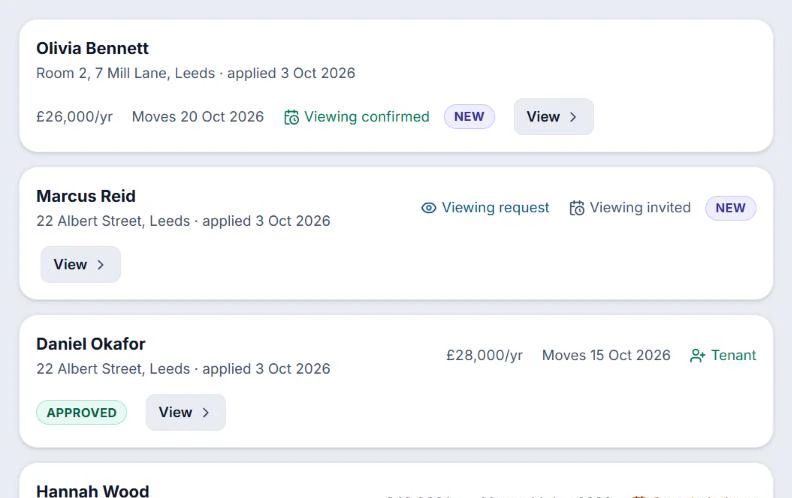
Every applicant from your advert in one list, with where their viewing has got to.
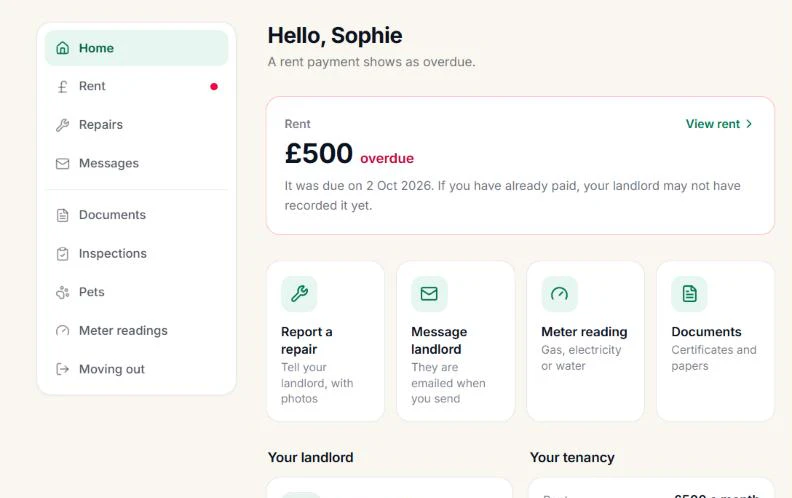
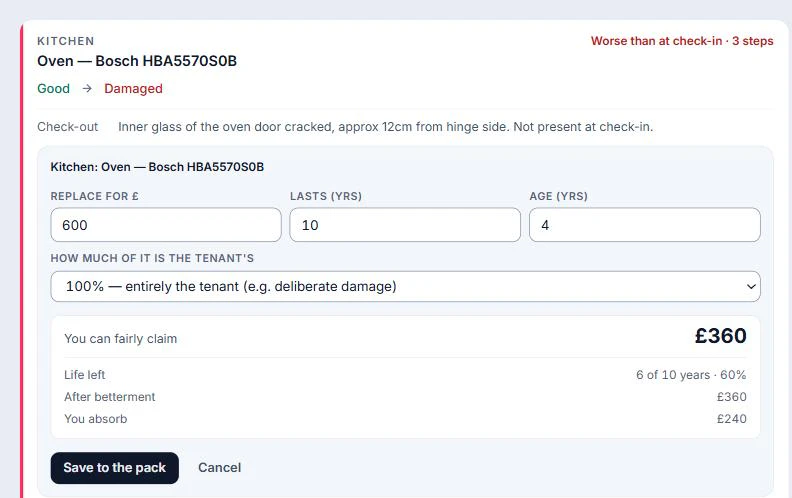
How applications workScreens from a sample account. Names, addresses and some details changed, and some parts left out to fit.
The short answer
Are electronic signatures legally binding in the UK?
Yes.Section 7 of the Electronic Communications Act 2000 makes an electronic signature, and the certification of that signature, admissible in evidence on any question about whether a document is authentic or has been altered. The Law Commission confirmed in 2019 that an electronic signature is capable in law of executing a document, provided the signer intends to authenticate it and any other formalities are met.
For an ordinary residential tenancy there are no other formalities: no witness, no wet ink, no printer. The one exception is a deed, which still needs a witness physically present. Since 1 May 2026 an assured tenancy is periodic and is not granted by deed, so it almost never touches renting.
- Signing links
- 30 days
- With a reminder before they expire
- Fingerprint
- SHA-256
- Of the document as signed
- Per envelope
- No charge
- On the trial and paid plans
The audit certificate
What the audit certificate records
Most tools will tell you they produce “an audit trail” and leave it there. A trail that does not say what it contains is not evidence of anything, so here is ours, field by field.
- Who
- Each signer, named, with the email the invitation went to.
- When
- A timestamp for each tenant’s signature.
- From where
- The IP address and the device used for each signing session.
- And fingerprinted
- A SHA-256 fingerprint of the signed document is recorded, so a later change is detectable.
Why those fields and not others: a signature on its own proves almost nothing in a dispute. The question actually asked is whether this person signed this version of this document. Section 7 of the Electronic Communications Act 2000 makes the certification of a signature admissible for precisely that question. So the certificate is not decoration around the signature, it is the part you would put in front of an adjudicator.
Step by step
Four steps, no printer
- Step 1
Generate the right agreement
Built for the law as it stands now: a periodic assured tenancy, not a fixed-term AST retired on 1 May 2026.
- Step 2
Send it to everyone who signs
Each tenant, joint tenants included, gets their own link and signs the same copy. No printer, no post, no scanning it back in. A guarantee goes to the guarantor to sign on paper, because a deed needs a witness.
- Step 3
They sign on a phone
Signing links last 30 days, with a reminder before they expire. The version they sign is the version you sent, and everyone gets a copy.
- Step 4
It seals, and stays put
The signed PDF and its certificate are kept with the documents sent to that tenant, ready to download again.
The honest limit
The one thing it cannot sign
A deed must be signed in the physical presence of a witness who attests the signature, and the Law Commission was clear that this holds even when everyone involved is signing electronically. No e-signature platform can wish that away, including ours.
For renting, this is mostly academic. Since 1 May 2026 an assured tenancy is periodic, so it is not granted by deed and the tenancy workflow never meets the rule. It matters if you are granting a long lease: a different job, and one to take advice on rather than assume.
The difference
Signing is a step, not a product
You can buy a standalone e-signature tool and pay per envelope. It will sign a document you had to draft somewhere else, and file it somewhere else again. The signature is not the hard part of letting a property. Being able to produce the right document, correctly signed, months later, is.
A standalone tool
In LetCompliance
Signs a document you had to draft somewhere else.
The agreement is generated for the law as it stands, then signed, so you are not e-signing a document drafted for a regime that ended on 1 May 2026.
Files it somewhere else again.
Signed documents stay in your account under Documents, listed against the property and tenant, where a deposit dispute or a Section 8 claim will look for them.
Paid per envelope.
It is part of the trial and paid plans. No per-envelope charge, no second subscription.
The same signing engine seals inventories and condition reports, so the move-in evidence carries the same certificate as the tenancy.
Prefer to watch?
See how it works
A screen tour of the whole let, end to end. No sign-up, no sales call. Just press play.
- Track rent and arrears, and draft the notice to get a property back
- Open the tenant portal (no password) and get the tax figures ready
- Add a property and watch the 0–100 compliance score appear
Questions
E-signing tenancy agreements, answered
Are electronic signatures legally binding in the UK?
Yes, for a normal residential tenancy. Section 7 of the Electronic Communications Act 2000 makes an electronic signature, and the certification of that signature, admissible in evidence in legal proceedings on any question about whether a document is authentic or has been tampered with. The Law Commission confirmed in its 2019 report on the electronic execution of documents that an electronic signature is capable in law of being used to execute a document, provided the person signing intends to authenticate it and any other required formalities are met. Nothing about renting a home falls outside that.
What is an audit certificate and why does it matter?
It is the record of how the signature happened, kept alongside the signature itself. Ours records who signed, when, from which IP address and on which device, and when each tenant signed. It matters because a signature on its own proves very little in a dispute: the question a court or a deposit adjudicator actually asks is whether this person signed this version of this document. Section 7 of the Electronic Communications Act 2000 makes the certification admissible for exactly that question, which is why the certificate is the point rather than a nicety.
Can a tenancy agreement be signed on a phone?
Yes. There is no requirement for a wet signature, a printer or a witness on an ordinary assured tenancy. The tenant opens a link, reads the agreement, signs on the screen and gets the signed copy. That is a real advantage: the agreement can be signed the same evening rather than sitting in a pile waiting for someone to find a printer, and the version everyone signed is the version you sent.
Is there anything an electronic signature cannot sign?
Yes: a deed. The Law Commission was explicit that a deed must still be signed in the physical presence of a witness who attests the signature, and that this remains the case even where the person executing the deed and the witness are both signing electronically. In renting this rarely arises: since 1 May 2026 an assured tenancy is periodic and is not granted by deed. It bites on long leases, so if you are granting one, take advice rather than assuming the tenancy workflow covers it.
What happens if a tenant later says they never signed?
This is what the certificate is for. You can show the signing session: the address it came from, the device, the timestamp, the time each tenant signed, and a SHA-256 fingerprint of the document as signed. Because that fingerprint is recorded and emailed, a later alteration is detectable rather than arguable. That turns "I never signed that" from your word against theirs into a record you can produce.
Does the signed agreement stay available after the tenancy ends?
Yes. The signed PDF and its certificate stay in your account under Documents, listed against the property and the tenant, with a download of the signed copy, next to your certificates and the rest of the property’s paperwork. The moment you need them, whether for a deposit dispute, a Section 8 claim, an insurer or an accountant, is never the moment you want to be searching an old inbox.
Does LetCompliance charge per signature?
No. E-signing is part of the trial and paid plans rather than a per-envelope charge, and it is the same signing engine used across the product: tenancy agreements, inventories and condition reports all use the same signing record. There is no separate e-signature subscription to buy alongside.
Can I e-sign an agreement I did not generate here?
Yes. Upload the PDF to the property’s documents and send it to the tenant for signature: it gets the same signature page and audit certificate as an agreement generated here. The one check worth making first is the document itself, because an agreement drafted for the pre-May-2026 regime is a problem an e-signature only makes faster. A password-protected PDF cannot take a signature, so upload an unprotected copy.
Explore more
LetCompliance seals every signed document with an audit certificate. This page is marketing content, not legal advice. Statutory references were checked against legislation.gov.uk in July 2026.

