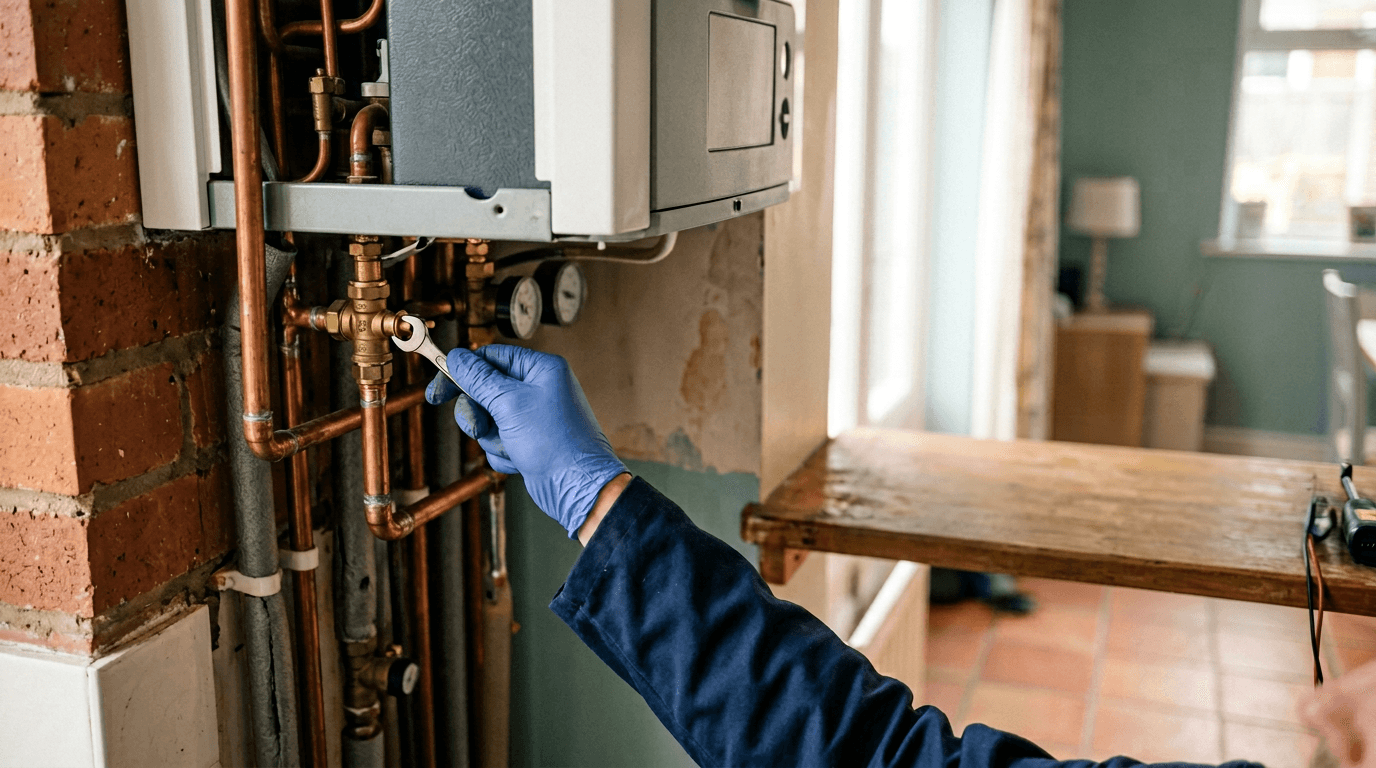
What people mean by “gas safety certificate rules UK”
If there's gas in a property you let, a Gas Safe registered engineer has to check every gas appliance and flue you provide every 12 months. The engineer's write-up is the Landlord Gas Safety Record, which most people call a CP12, and the duty comes from the Gas Safety (Installation and Use) Regulations 1998. This guide covers the annual cycle, the tenant's copy, new appliances and what a lapse does now. It's not legal advice, so confirm the detail on GOV.UK and with the HSE.
LetCompliance keeps the CP12 date for each property with reminders before it's due, alongside the rent, the notices and the tax for the rest of the let. See LetCompliance features and pricing (plans from £7.99 a month, and one property can stay on the free plan).
The annual cycle (no exceptions)
- Book inside the 12-month window. Many landlords use the 2-month early rule to avoid Christmas bottlenecks
- Engineer must be Gas Safe for the appliance types at the property
- Record defects and remedial work; “immediately” dangerous categories require action per engineer instruction
- Provide tenant copy within 28 days of the check; new tenants get current record at move-in
A lapsed record used to block a Section 21 notice, back when that route existed, and enforcement can be criminal in serious cases. The full detail is in the Gas Safety certificate guide.
New appliances, conversions and voids
New boiler or fire? You need the right commissioning and paperwork, so don't assume the annual date from the old appliance carries across unchanged. Empty properties still need planning if the gas is on and you're marketing soon: arrange contractor access before the tenants move in.
HMOs, room lets and shared houses
Per-room rents do not remove landlord gas duties at the building level. HMO licence conditions may require stricter inspection intervals or interlinked CO detection, so follow whichever is stricter: the licence or the national rules. See the HMO compliance guide.
Evidence that survives a dispute
Keep the PDF CP12s with the engineer's number visible, the email that proves the tenant got a copy, and a log of access attempts if a tenant refuses entry (take advice first: letting yourself in is risky).
Pricing compliance software alongside engineer fees
A single missed renewal can cost far more than a year of software. LetCompliance emails you at 90, 30, 14, 7 and 1 days before the gas check is due (paid plans add SMS), scores each property 0 to 100, and runs the rest of the let from the same place: the rent ledger with arrears chasing, the SA105 tax pack and, on paid plans, the Section 8 notice builder. Compare features with pricing, then get started, from £7.99 a month.
Further reading: Gas Safety engineer cost · landlord fines 2026 · 2026 compliance checklist
What the engineer actually checks
A Landlord Gas Safety Record is not a rubber stamp. The Gas Safe engineer is checking each appliance and flue for gas tightness, correct operating pressure, adequate ventilation, safe removal of combustion products, and the condition of the flue.
Anything found is classified, and the classification decides your duty:
- Immediately Dangerous. The appliance is unsafe now. It will be disconnected or capped with your permission, and it must not be used until it is fixed.
- At Risk. One or more faults could become dangerous. It should be turned off pending repair.
- Not to Current Standards. Not unsafe, but not to today's spec. Not urgent, but note it and plan.
The record shows the engineer's Gas Safe registration number, the date, every appliance tested and the outcome. If the copy you hold does not show those, it is not evidence you can rely on.
The 28-day and move-in rules, concretely
Two separate obligations, and landlords routinely merge them.
Existing tenants must receive a copy of the new record within 28 days of the check. New tenants must be given the current record before they move in, not on the day and not afterwards.
A worked timeline. The annual check falls due on 14 March. You book it for 2 March, using the two-month early window so the next due date still runs from the original anniversary rather than sliding later each year. The engineer emails the record on 2 March. You forward it to the tenant on 3 March and keep the sent email. That's well inside the 28 days, and the compliance date hasn't drifted.
That last point is worth dwelling on. Booking late every year quietly pushes your renewal forward until one year it slips past twelve months entirely.
If the tenant will not give access
This is the most common reason a certificate lapses, and "the tenant would not let me in" is not by itself a defence. What helps is showing you took all reasonable steps.
Give written notice of the appointment, at least 24 hours, at a reasonable time. If it is missed, write again offering alternatives, including evenings or a weekend. Keep every message. Explain plainly that the check is a legal safety requirement, not an inspection of them.
If access is still refused after repeated documented attempts, take advice about an injunction. Do not let yourself in. Forcing entry converts a compliance problem into harassment or unlawful eviction, which is far worse than a late certificate. See landlord access and the 24-hour rule.
What a lapsed certificate does, and does not, do in 2026
Be precise here, because a lot of older content is now misleading.
A lapsed record is a breach of the Gas Safety (Installation and Use) Regulations 1998. That is a criminal matter, carrying an unlimited fine and, in serious cases, imprisonment. It is the reason to stay on top of it.
Historically it also invalidated a Section 21 notice. Section 21 was abolished on 1 May 2026, so that particular consequence has gone with it. Gas safety was never a Section 8 precondition either, so a lapsed certificate does not by itself bar a Section 8 possession claim. It remains exactly the sort of thing a tenant raises in a disrepair counterclaim, and it undermines you on any discretionary ground.
In short: the possession angle has softened. The criminal exposure has not.
Sources and scope
- Gas Safe Register (find an engineer)
- Legislation: Gas Safety (Installation and Use) Regulations 1998
- HSE: Gas safety in rented accommodation (ACOP & guidance)
Every figure on this page is cited to GOV.UK, legislation.gov.uk or HSE and reviewed against the live source every quarter. This is guidance, not individual legal advice.
2026 UK Landlord Compliance Cheat Sheet
The main duties, deadlines and maximum penalties for a private let in England on two printable A4 pages, and which failures stop a possession order. Updated for the rules in force since 1 May 2026.
- Duties before and during the tenancy, with the deadline for each
- Maximum penalties, including the £40,000 electrical safety figure
- Which failures bar a Section 8 possession order, and which do not
- The possession grounds landlords use most, with notice periods
Frequently asked questions
How often does a landlord need a gas safety certificate in the UK?
In England, landlords must have a Gas Safe registered engineer carry out an annual gas safety check for relevant appliances and flues in let properties, and keep a Landlord Gas Safety Record (CP12). Tenants must receive a copy within 28 days of the check; new tenants should receive the current record at the start of the tenancy.
Can only a Gas Safe engineer issue a landlord gas safety record?
Yes. Only engineers registered on the Gas Safe Register for the relevant appliance types may perform the check and issue the record. Always verify registration on the official Gas Safe website before booking.
What happens if my tenant refuses access for the gas safety check?
You must be able to show you took reasonable steps, because the duty does not disappear when the tenant will not co-operate. Offer several dates in writing, including one outside working hours, write again explaining the safety reason and the legal obligation, and keep every letter, text and no-show logged with its date. That record is your defence if the certificate lapses. What you must not do is let yourself in without consent, which risks a harassment or unlawful eviction allegation on top of the gas problem.
Do I need a gas safety certificate if the property has no gas?
No. The duty applies to relevant gas appliances, pipework and flues, so a fully electric property needs no CP12. Two cautions. If there is a capped or disconnected supply, get written confirmation from a Gas Safe engineer of what is left and whether it needs a check, rather than assuming. And note the electrical duty is separate and does apply: you still need an EICR at least every five years.
How long do I have to give the tenant a copy of the gas record?
Existing tenants must receive a copy within 28 days of the check. New tenants must have it before they move in. Keep the record for at least two years, and keep the proof you sent it. An email with the attachment, kept in your sent items, is the simplest evidence. Serving it is a separate duty from obtaining it, and it is the half landlords more often miss.

