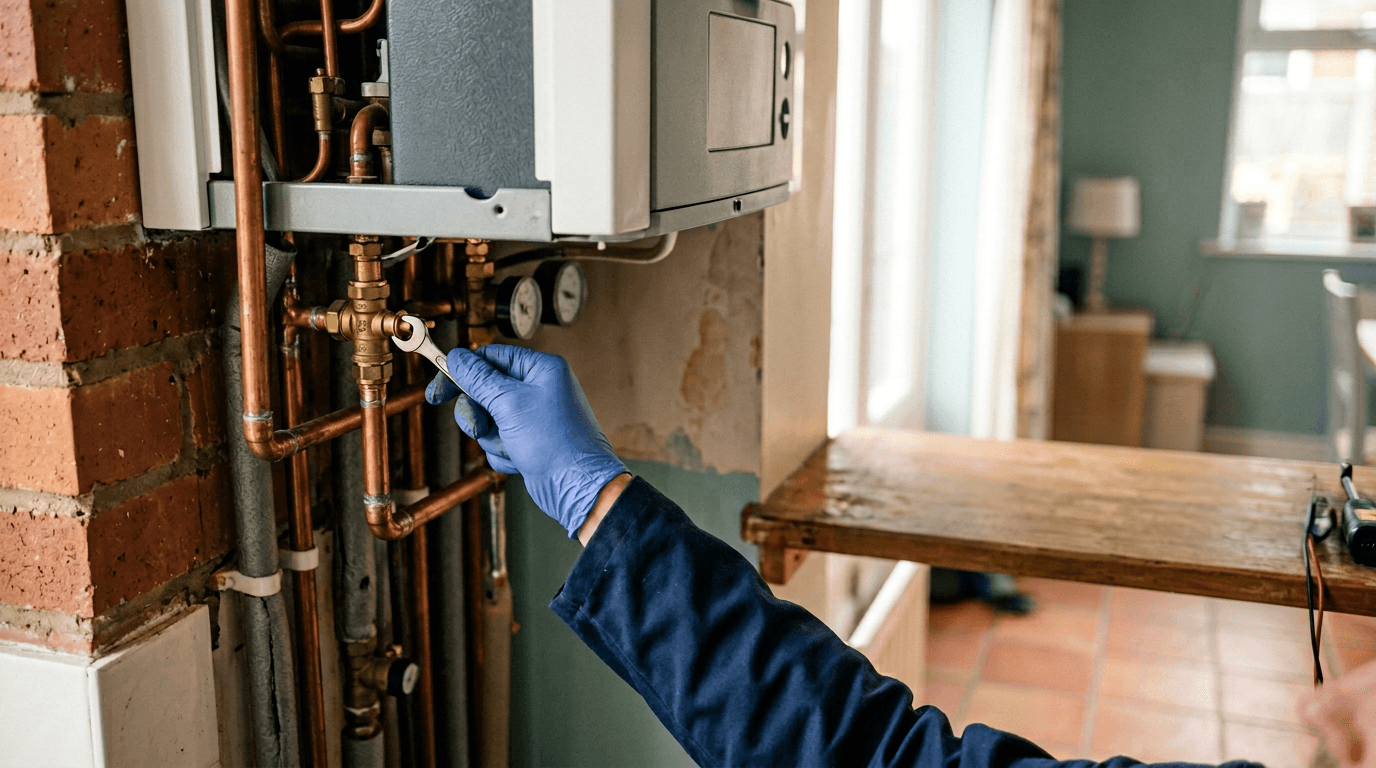
A tenant tells you there's damp in the back bedroom. What you do next, and whether you can prove it later, decides whether that report ever turns into a housing disrepair claim. These claims are often brought by no-win-no-fee firms that advertise directly to tenants, and the claim is simple: the landlord was told about a defect, failed to fix it in a reasonable time, and now owes the cost of the repair plus compensation plus legal costs. A single damp-and-mould case can run to thousands of pounds, most of it avoidable.
Here is the uncomfortable part and the good news in one sentence: these claims are won and lost on whether you can prove you responded. This guide, for landlords and agents alike, covers what you are actually responsible for, the hazard timescales social landlords now work to, and the evidence that makes a claim collapse.
General information, not legal advice. Disrepair liability is fact-specific; on a live claim, get advice promptly.
What landlords are actually responsible for
Your repairing duties are not optional and cannot be contracted out of:
- Section 11 of the Landlord and Tenant Act 1985 makes you responsible for the structure and exterior, and the installations for water, gas, electricity, heating and sanitation, regardless of what the tenancy says.
- The Homes (Fitness for Human Habitation) Act 2018 requires the property to be fit to live in throughout the tenancy. A tenant can sue you directly if it is not.
- Hazards are assessed under the council's hazard rating system (HHSRS), covering damp and mould, excess cold, fire, falls and more.
If a defect falls in these categories and you were told about it, the clock on your liability is already running.
From £7.99 a month, LetCompliance starts that clock on the record rather than in an inbox: the tenant reports the defect through the tenant portal with photos, the report is timestamped and tracked to the repair with the contractor you sent, and the history exports in date order. Get started
Hazard timescales: binding on social landlords, good practice for you
The biggest change is speed. Following Awaab's Law, fixed timescales apply to serious hazards in social housing. The Awaab's Law rollout is the direction of travel for the private rented sector, but it hasn't arrived: those fixed deadlines bind social landlords, not private ones, and the power to extend them under the Renters' Rights Act has not been exercised. What already binds you is Section 11, fitness for habitation and HHSRS. So treating a damp report as a clock that starts is best practice today and likely obligation tomorrow. The Decent Homes Standard for the PRS is planned to raise the baseline condition every private rental must meet, from 2035.
The practical effect for a private landlord: there's no fixed Awaab's Law deadline yet, and no date has been set for one. But a slow response is still what a disrepair claim is built on, and a tenant's claim firm will time their case from the day you were notified.
How a disrepair claim actually unfolds
Understanding the process shows you exactly where to defend it:
- 1The tenant reports a defect, or a claims firm says they did.
- 2Under the Pre-Action Protocol for Housing Conditions Claims, the tenant's solicitor sends a letter of claim, and you have a short, fixed window (around 20 working days) to respond with your records: when it was reported, what you did, and when.
- 3An expert inspects, and the claim covers the repair, general damages (often calculated as a percentage of rent for the period the defect persisted) and the tenant's legal costs.
The entire case turns on step 2. A landlord who produces a dated log showing prompt action usually defeats or drastically reduces the claim. A landlord who cannot show what happened, loses.
The evidence that defeats a claim
You defend disrepair the same way you defend a deposit dispute: with a timeline a stranger will believe. Keep, for every report:
- The date the tenant first reported it, however they reported it.
- Your response and its date: the acknowledgement, the contractor instructed, the appointment booked.
- The work done, with receipts and invoices and ideally before-and-after photos.
- Access records: if the tenant refused or missed appointments, that is a powerful part of your defence, but only if you logged it.
"We dealt with it" is not evidence. A dated trail showing you acted within days is. The landlords who lose are rarely the ones who did nothing; they are the ones who did something and cannot prove when.
Damp and mould: the claim to take most seriously
Damp and mould drive a large share of disrepair claims and are now the most scrutinised hazard of all. Treat every report as urgent, investigate the cause rather than just painting over it, and document the diagnosis and the fix. Blaming "tenant lifestyle" without investigating is exactly the response that loses cases now. The full duties and the operational response are in the damp and mould guide.
For agents: the report you logged is the agency you protect
For a managed property, a disrepair claim is a direct test of your systems. Did the maintenance report reach the right person the day it came in? Was a contractor instructed promptly? Can you, months later, produce the timeline? When a claim firm sends a letter of claim, the landlord turns to you, and a redress scheme will ask whether you acted reasonably. An agency that logs every report with a timestamp and tracks it to completion has a defence ready; one relying on a shared inbox is exposed on every door it manages.
Turning maintenance into a defence, automatically
Disrepair claims almost never succeed because the landlord refused to repair. They succeed because the report sat in an inbox, the fix was never logged, and two years later nobody can prove the timeline. In LetCompliance the evidence is a by-product of the work. Tenants report issues through the tenant portal, and every report is timestamped and tracked to resolution, with the contractor you sent. Repair receipts, inspection photos and the gas and electrical certificates sit on the same property record, and the whole history exports in date order, ready to give to your solicitor.
For a self-managing landlord that turns a frightening letter of claim into a five-minute export. For an agency it is a documented response on every property, not a scramble through old emails.
The one-line takeaway
You cannot stop tenants reporting problems, and you should not want to. What you can control is how fast you respond and whether you can prove it. Meet your repairing duties, treat hazards (especially damp and mould) as urgent, log every report and action with a date, and a disrepair claim has nothing to stand on. The repair was rarely the problem; the missing timeline was.
From £7.99 a month, get started with LetCompliance to log every maintenance report, track it to completion and keep a dated repair history on each property, or read the damp and mould responsibilities first.
Sources and scope
- GOV.UK: Renting out a property
- GOV.UK: Your landlord’s safety responsibilities
- HSE: Gas safety in rented properties
Every figure on this page is cited to GOV.UK, legislation.gov.uk or HSE and reviewed against the live source every quarter. This is guidance, not individual legal advice.
2026 UK Landlord Compliance Cheat Sheet
The main duties, deadlines and maximum penalties for a private let in England on two printable A4 pages, and which failures stop a possession order. Updated for the rules in force since 1 May 2026.
- Duties before and during the tenancy, with the deadline for each
- Maximum penalties, including the £40,000 electrical safety figure
- Which failures bar a Section 8 possession order, and which do not
- The possession grounds landlords use most, with notice periods
Frequently asked questions
What counts as housing disrepair?
Disrepair covers defects the landlord is responsible for under Section 11 of the Landlord and Tenant Act 1985 (structure, exterior, and water, gas, electricity, heating and sanitation installations) and anything that makes the home unfit under the Homes (Fitness for Human Habitation) Act 2018, including damp, mould and excess cold.
How do landlords defend a disrepair claim?
With dated evidence that you responded promptly: when the tenant reported the defect, when you acknowledged it, when a contractor attended, and the receipts for the work. Under the pre-action protocol you must produce these records within about 20 working days of a letter of claim.
How much compensation can a tenant get for disrepair?
It varies, but general damages are often calculated as a percentage of the rent for the period the defect persisted, on top of the repair cost and the tenant’s legal costs. The longer the unresolved period you cannot account for, the larger the award.
Are damp and mould the landlord’s responsibility?
Usually yes, though not because of Awaab’s Law. Damp and mould are HHSRS hazards, and Section 11 of the Landlord and Tenant Act 1985 plus the Homes (Fitness for Human Habitation) Act 2018 already require a private landlord to investigate the cause and make the property safe rather than blaming tenant lifestyle without investigating. Awaab’s Law adds fixed timescales on top: it has applied to social landlords since 27 October 2025, and the Renters’ Rights Act 2025 carries the power to extend it to the PRS, which is not yet in force.

