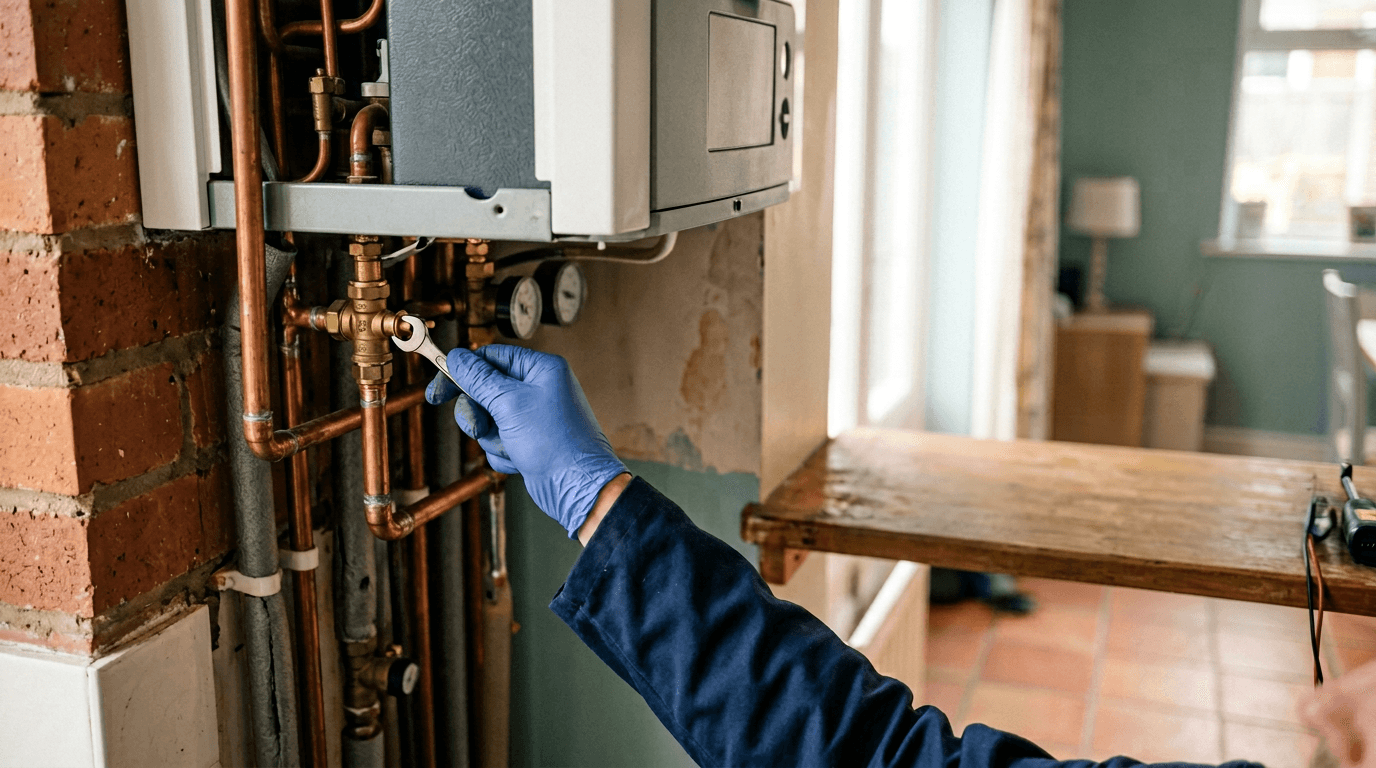
Your tenant emails to say there’s mould in the bathroom. It used to be a routine maintenance ticket. Now, handled badly, it can become a hazard the council has to act on (HHSRS Category 1), a Section 11 disrepair claim, a claim that the home isn’t fit to live in and, if you ignore an improvement notice, the basis for a Rent Repayment Order.
This guide is the practical response: what to do in the first 24 hours, the first 7 days and the first 14 days, and what to keep on file. Awaab’s Law timescales bind social landlords only for now: the Renters’ Rights Act 2025 lets the government extend them to private landlords, but no date has been set. The Decent Homes Standard is planned for private rentals from 2035. For the Awaab’s Law regime itself, see Awaab’s Law for landlords 2026.
Your statutory duties at a glance
- Section 11, Landlord and Tenant Act 1985: you keep the structure and exterior in repair, along with the installations for water, gas, electricity, sanitation, space heating and water heating (an implied repairing obligation). Damp from a structural defect (failed roof, leaking gutter, broken DPC) sits squarely here.
- Homes (Fitness for Human Habitation) Act 2018: the home must be fit to live in ("fit for human habitation") throughout the tenancy, as an implied term. The Act expressly names freedom from damp as a fitness factor.
- Housing Health and Safety Rating System (HHSRS) under the Housing Act 2004: the scoring system councils use, and their primary enforcement framework. Damp and mould is Hazard 1 in the operating guidance. The council must act on a Category 1 hazard; action on Category 2 is at its discretion.
- Decent Homes Standard (PRS): not in force for private rentals yet. The government plans to apply it from 2035, and it will include being free from damp and mould and from serious (Category 1) HHSRS hazards.
- Awaab’s Law: statutory timescales for investigating and fixing prescribed hazards. Social landlords only for now; the Renters’ Rights Act allows an extension to private landlords, but no date has been set.
In practice, all of them come down to what was reported, when, and what you did next. From £7.99 a month, LetCompliance takes the tenant’s report through the tenant portal with photos, dated the moment it arrives, so the steps below run from a date on record, and the inspection, the contractor and the invoice follow it on the same property. Get started
Step 1: Acknowledge and book the inspection within 24 hours
Whatever you do, do not ignore a written complaint. Every email, text or letter mentioning "damp", "mould", "wet wall", "black spots" or "condensation" should be treated as a legal trigger.
Within 24 hours:
- 1Acknowledge in writing (email, with audit log) that you have received the complaint.
- 2Ask three diagnostic questions: "Where in the property?", "When did it start?", "Are there visible water stains, brown patches or black mould patches?"
- 3Book an inspection within the next 5 working days (faster if vulnerable adults / children / asthmatic occupants are mentioned).
Why this matters: the date the complaint was received and the date the inspection was booked is the first thing any tribunal, ombudsman or enforcement officer asks for. A 24-hour written acknowledgement is the cheapest insurance you can buy.
Step 2: The inspection visit, within 7 days
A competent inspection covers six things:
- 1Visible patterns: photograph every affected wall, ceiling and corner, with date stamps
- 2Damp meter readings: surface and depth, recorded with location
- 3Where the water comes from: is it (a) penetrating (failed roof, gutter, render, sealant), (b) rising (failed DPC, ground levels, no DPM), or (c) condensation (poor ventilation, low background heating, occupant lifestyle)?
- 4Ventilation: do the extractor fans work? Are the trickle vents open? How are the windows used?
- 5Heating: is the boiler serviced? Are there enough radiators? Is there background heat?
- 6Occupant factors: clothes dried indoors? How many people live there? How much cooking?
Take photographs of all six. Categorise the cause in writing at the inspection. The cause drives the remediation. Penetrating and rising damp are yours to fix. Condensation usually is too: government guidance puts its causes on the building (ventilation, heating, insulation) rather than on how the tenant lives, so check the fans, vents and heating before anything else.
Step 3: Risk-rating the hazard (HHSRS in plain English)
The HHSRS scoring system is what local authority Environmental Health Officers use. You don’t need to be one to think like one.
HHSRS doesn’t use fixed thresholds such as a mould area or a number of months. The officer scores how likely the damp is to cause harm, and how serious that harm could be, for the group most at risk. For damp and mould, that group is children aged 14 or under. A high score is a Category 1 hazard, which the council must act on; a lower score is Category 2, where action is up to the council.
Signs that point to a higher score:
- Mould that covers a large area or keeps coming back
- Mould in a bedroom, or on bedding, clothes or furniture
- A child aged 14 or under living there, or anyone whose breathing is already affected
- Damp that has gone on for a long time without a fix
Signs of a lower score:
- A small patch in one bathroom corner
- Recently appeared and already being dealt with
If you see the higher-score signs, do not wait. Move to Step 4 immediately.
Step 4: Remediation and re-inspection within 14 days
Awaab’s Law (in force for social landlords from 27 October 2025; no date has been set for private landlords) prescribes, for a significant damp or mould hazard:
- Investigation within 10 working days of the report
- Written summary to the tenant within 3 working days of the investigation
- Make the home safe within 5 working days of the investigation
- Emergency hazards investigated and made safe within 24 hours
For private landlords these timescales aren’t a legal duty, but treating them as your standard is what defends you against a disrepair claim or a council improvement notice.
Remediation matrix:
- Penetrating damp (e.g. failed gutter): book the trade, fix at source, then treat affected internal surfaces. Don’t paint over a leaking wall: it will reappear, and the second visit is what turns a repair into a complaint to the council.
- Rising damp: confirmed only by an independent surveyor with a calcium carbide test (not just a pin-meter). If confirmed, DPC injection or chemical treatment plus internal re-plaster: a 4–8 week job.
- Condensation: install a humidistat-controlled extractor fan in the bathroom (typically £250–£500 fitted), fit trickle vents to all windows, mould-wash affected surfaces with fungicide. Issue written ventilation guidance to the tenant on the same day.
Whatever the cause, re-inspect after remediation (a fortnight is a sensible self-imposed check) and write down what you found. Inspection reporting software gives that visit a checklist with a damp and mould section, dated photos and a report PDF compared with the previous inspection, on the same property record as the repair.
Step 5: Communications and documentation
Your best defence against a council investigation, a disrepair claim or an RRO is a dated paper trail. Every interaction goes in writing.
Minimum documents to keep:
- 1Tenant’s original complaint (email, letter, message)
- 2Your 24-hour acknowledgement
- 3Inspection booking confirmation
- 4Inspection report with photographs and damp-meter readings
- 5Diagnostic conclusion (cause categorisation)
- 6Contractor quote / instruction
- 7Works completion sign-off
- 8Tenant’s acknowledgement of completion
- 9Re-inspection report
- 10Any guidance issued to the tenant on ventilation / heating
In LetCompliance these sit against the property, each one dated: the tenant’s report and photos from the tenant portal, your inspection photos, the contractor’s job and the invoice. When the council or a solicitor asks for "all communications relating to the damp complaint of [date]", you have them in date order.
Common mistakes that turn a fix into a fine
- 1Ignoring the first email. A prolonged silence after the first report is one of the most common failings the Housing Ombudsman cites in its social-sector damp decisions. That is the body of case law the PRS scheme is expected to follow when it opens.
- 2Blaming the tenant for "lifestyle" condensation without an inspection. Under HHSRS the landlord is responsible for adequate ventilation: fans, vents, background heating. Lifestyle is at most a contributory factor.
- 3Painting over mould without treating the cause. Cosmetic-only repair, with no attempt at the underlying cause, is another repeated criticism in those decisions.
- 4Issuing a possession notice shortly after a damp complaint. The protection against revenge evictions (Deregulation Act 2015 ss.33–34) made a Section 21 notice invalid for 6 months where the council served a relevant improvement notice. Section 21 is now abolished, but the Renters' Rights Act carries anti-retaliation protection into the new regime. Serving a landlord-ground Section 8 notice hard on the heels of a disrepair complaint invites the same scrutiny, so check the current rules before serving.
- 5No re-inspection. Closing a ticket without checking the fix held is the first gap a council officer or the tenant's solicitor will look for.
- 6No record of contractor instructions. Verbal "I told the plumber to look at it" does not survive cross-examination at the First-tier Tribunal.
What it costs you to get this wrong (2026)
- Improvement Notice under HHSRS: mandatory, and you must comply within the period stated (often 28 days for serious hazards)
- Hazard Awareness Notice: lighter touch, but it puts the hazard on record
- Civil penalty up to £40,000 for not complying with an Improvement Notice (for conduct from 1 May 2026; £30,000 before that)
- Rent Repayment Order: up to two years’ rent repaid to the tenant for housing offences from 1 May 2026
- Banning Order: in serious or repeat cases, you can be banned from being a landlord
- The old Section 21 bar is gone: an improvement notice used to stop you serving a Section 21 notice for 6 months. Section 21 was abolished on 1 May 2026, and that bar does not apply to Section 8 grounds such as Ground 1A
- Insurance void: some buildings policies exclude liability where there is documented disrepair you haven’t dealt with
What it costs you to get this right
- Bathroom extractor fan + trickle vents + ventilation note: £300–£600
- Roof patch + gutter clean + render repair: £500–£2,000
- DPC injection + re-plaster (small house): £2,500–£5,000
- Rewire + boiler service if heating is the underlying issue: variable
In every case the fix is dramatically cheaper than the enforcement consequence.
How LetCompliance helps
A mould report doesn’t arrive on its own. The rent, the certificates and the tenancy are all running at the same time, and LetCompliance keeps them against the same property.
- Tenant portal: the tenant logs the problem with photos and the report is time-stamped, so your 24-hour acknowledgement clock has a clear start.
- Repairs and contractors: each contractor instruction, quote and completion sign-off sits against the issue and the property.
- Compliance score: a 0 to 100 score per property, built from the certificate dates, with email reminders (SMS too on paid plans) at 90, 30, 14, 7 and 1 days.
- Activity log: every step is time-stamped, so you can show the council what happened and when.
Get started. One property is free, and the next damp email lands against the property it belongs to, not in your personal inbox.
Where to go next
- Awaab’s Law for landlords 2026: the statutory regime
- Decent Homes Standard PRS 2026: planned for private rentals from 2035
- How long does it take to evict a tenant in England in 2026: if a tenancy is past saving
- Landlord access to property UK 2026: how to get in to inspect
Sources and scope
- Legislation: Landlord and Tenant Act 1985 s.11 (repair obligation)
- Legislation: Homes (Fitness for Human Habitation) Act 2018
- GOV.UK: Housing health and safety rating system (HHSRS) operating guidance
- GOV.UK: Damp and mould, understanding and addressing the health risks
- Legislation: Social Housing (Regulation) Act 2023 (Awaab’s Law origin)
- Legislation: Renters’ Rights Act 2025 (PRS extension)
- Housing Ombudsman: Spotlight report on damp and mould
Every figure on this page is cited to GOV.UK, legislation.gov.uk or HSE and reviewed against the live source every quarter. This is guidance, not individual legal advice.
2026 UK Landlord Compliance Cheat Sheet
The main duties, deadlines and maximum penalties for a private let in England on two printable A4 pages, and which failures stop a possession order. Updated for the rules in force since 1 May 2026.
- Duties before and during the tenancy, with the deadline for each
- Maximum penalties, including the £40,000 electrical safety figure
- Which failures bar a Section 8 possession order, and which do not
- The possession grounds landlords use most, with notice periods
Frequently asked questions
Who is responsible for damp and mould in a rented property in England?
The landlord is responsible for damp and mould caused by structural or installation defects (penetrating damp, rising damp, failed roof, broken DPC, inadequate ventilation provision) under Section 11 LTA 1985 and the Homes (Fitness for Human Habitation) Act 2018. Condensation is usually the landlord’s to fix too: government guidance says it is unreasonable to blame damp and mould on tenants’ lifestyle, and puts the causes on the building (ventilation, heating, insulation). The landlord provides adequate ventilation and heating, and the tenant is expected to use them.
How quickly must a landlord respond to a damp complaint in 2026?
Awaab’s Law, in force for social landlords since 27 October 2025, prescribes for a significant damp or mould hazard: investigate within 10 working days, written summary to the tenant within 3 working days of the investigation, and make the home safe within 5 working days of the investigation. Emergency hazards get 24 hours. The private-sector extension is expected via regulations under the Renters’ Rights Act 2025 but is not yet in force, so for now these are the sensible operational standard to adopt rather than a binding duty on a private landlord.
Can a tenant withhold rent for damp and mould?
No. Rent withholding is rarely lawful and creates a Section 8 ground 8 / 10 / 11 risk for the tenant. The tenant’s correct routes are (a) request repairs in writing, (b) escalate to the local authority Environmental Health team (HHSRS inspection), (c) once it opens, complain to the Private Rented Sector Landlord Ombudsman, or (d) bring a disrepair claim under Section 11 LTA 1985 with damages.
Is condensation the tenant’s fault?
Not solely. The Housing Ombudsman, which covers social housing, has repeatedly criticised landlords who blame tenants for damp without investigating, and the landlord is expected to provide adequate ventilation (working extractor fans, trickle vents, heating that can keep the home warm). Even where lifestyle contributes, check the building first: inspect, then give ventilation guidance, and never blame without evidence.
What is HHSRS Category 1 for damp and mould?
A Category 1 hazard is one assessed (under the HHSRS scoring system) as posing a serious risk to occupant health. There are no fixed thresholds such as a mould area or a number of months: the officer scores how likely and how serious the harm is for the group most at risk, which for damp and mould is children aged 14 or under. Category 1 triggers mandatory enforcement by the local authority, which typically means an Improvement Notice.

